729.jpg)
773.jpg)
760.jpg)


.JPG)
.JPG)

 Tarantulas are considered by many people as dangerous animals. They even have been used by the motion picture industry as instruments of terror in films, such as the science fiction horror film, Tarantula (1955). Even in the first agent 007 film, Dr. No (1962)where one scares the hells out of James Bond, and in, Indiana Jones: Raiders of the Lost Arc (1981), among many others. In Indiana Jones, they used close to 100 live tarantulas.
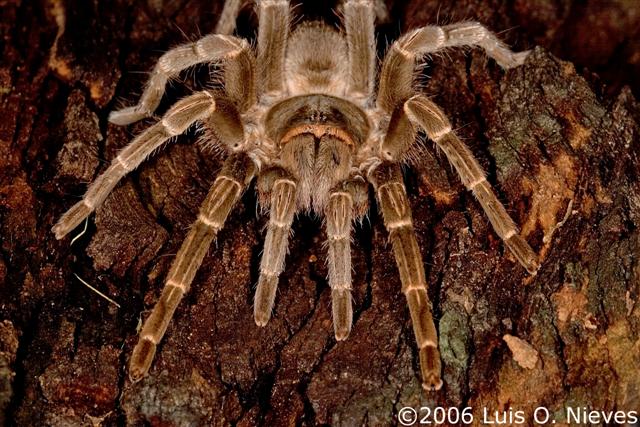
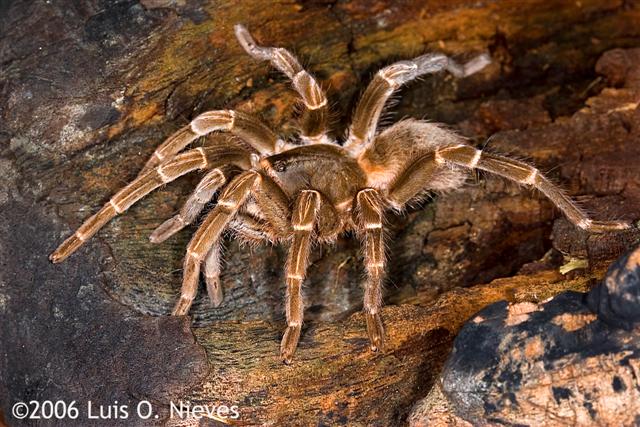
 tarantula, Theraphosa blondi, and its sister, Theraphosa apophysis, both from South America. Pseudotherathosa apophysis is the biggest tarantula, with a leg span of about 13 inches (33 cm). These arachnids have a very long life span; some species can live over 30 years. Phormictopus cancerides, a tarantula from the Hispaniola, has been identified as the largest tarantula of the Antilles with 16-18 cm (both photos on the right).
 Because of their weight, they can't spin webs, so each species either lives in underground burrows, on the ground, or in trees. Tarantulas eat insects, other arachnids, small amphibians and reptiles, bird chicks and mice.
 In Puerto Rico, there are seven species, among them the terrestrial Cyrtopholis portoricae (photo on the left) and the arboreal Trichopelma corozae and Avicularia laeta. Despite their ferocious appearance, no one has ever died of a tarantula bite. Because of their weight, they can't spin webs; so depending on the species,they either live in underground burrows, on the ground, or in trees.
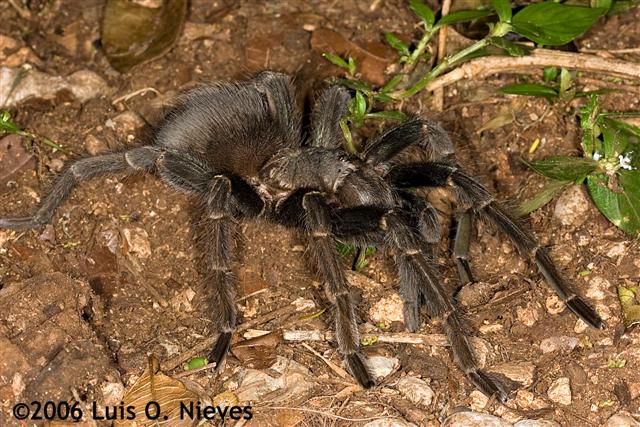
 The Puerto Rican Pygmy, Cyrtopholis portoricae is the most common species of tarantula in Puerto Rico. Although it is called a "pygmy", they are medium-sized terrestrial tarantulas that live in burrows digged on the ground, where they can be found during the day. This species has a dark brown with light rosy stripes on each leg. Some people regard them as extremely aggressive, this is exagerated. They will defend themselves if provoked or if they feel threathened.
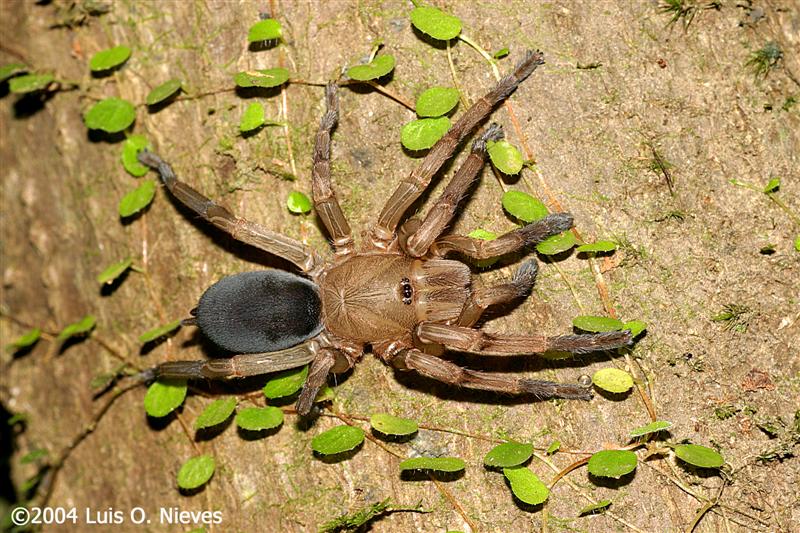 photo was taken on the trail to Mt. Britton at the El Yunque National Forest (formely known as the Caribbean National Forest) after the spider emerged from its burrow during the night. It can be easily identified by just looking at the abdomen with dark-grey or black hairs.
 Avicularia laeta, or the Puerto Rican Tree Tarantula, is also an endemic species to the Greater Puerto Rican Region. Unlike other tarantulas, this species is adapted to an arboreal lifestyle, because they possess under the distal portion of the legs made of
 microscopic hooks; this allows
 This adventure is not for the faint of heart. The trip to La Soufrière started with a drive from Kingstown, the capital of St. Vincent and the Grenadines, which is located on the southwestern part of the island. There is a drive (for us on the wrong side of the road, left side) through a rugged and narrow road to the east windward coastline, passing through the town of Georgetown and then turning westward (inland) again through Orange Hill (a banana plantation).
 This hike can be attempted also from the western (Leeward) side of the island where there is another trail near Chateaubelair. This one is longer than the eastern trail and takes about seven hours of strenuous hiking, instead of just four hour. Some people hike from east to west, so their descent is from the most demanding part of the trail.
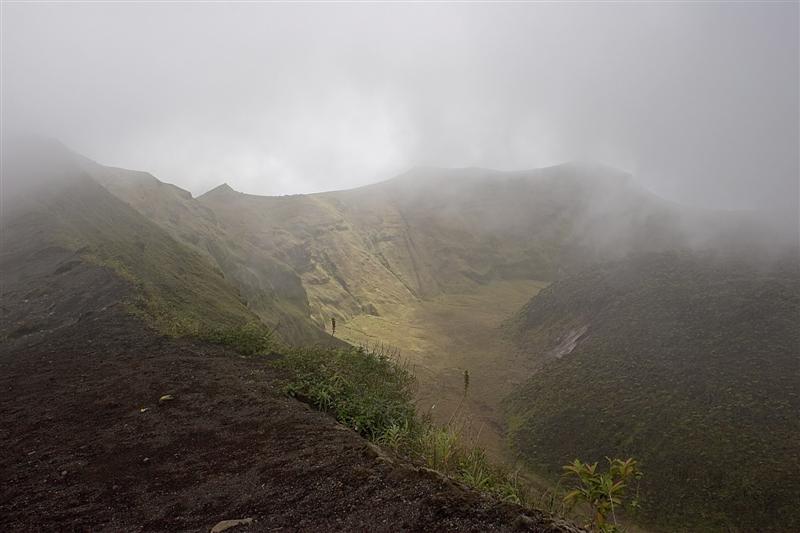
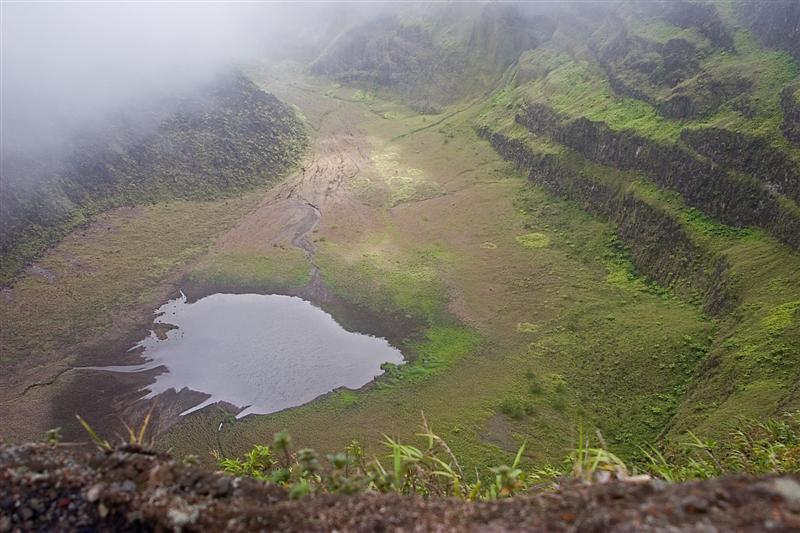 La Soufrière’s last eruption was in April 1979. Later, experts studied the succession of deposits on the volcano’s flanks, thus acquiring excellent records of its history. According to this record, La Soufrière’s activities started approximately at least half a million years ago, with periods of inactivity lasting thousands of years. It has been determined, that the present period of activity started about 1,300 AD. However, written records date only back some 284 years, when in 1718, an eruption which left a mile-wide, 1,500 feet deep crater was documented. A lake then formed inside the crater. You can see on the last photo what is left of the lake. The magma dome is growing, but predictions as to the next volcanic activity are yet to be made.
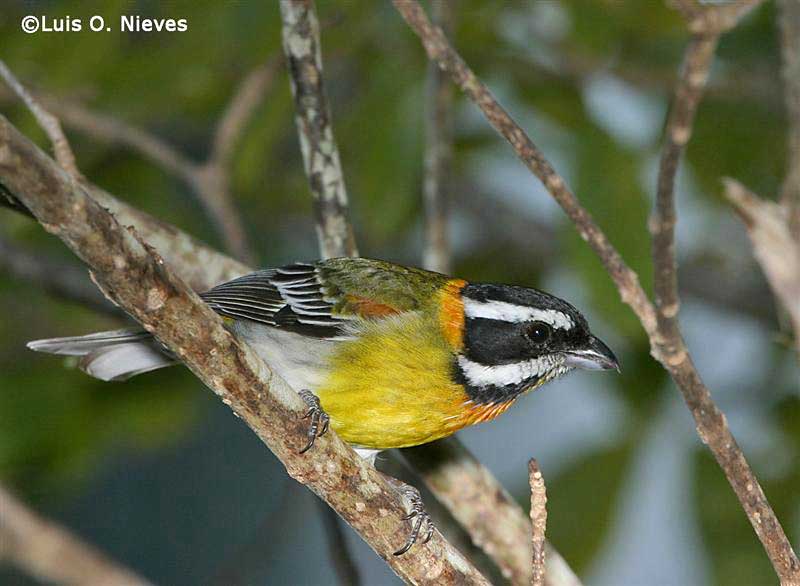 Spindalis portoricensis is endemic to Puerto Rico and commonly found almost throughout the Island on forests, plantations and even on urban and suburban areas. There is a marked sexual dimorphism with the male’s brighter coloration, than the female’s dull olive-green colored plumage. This species feeds on fruits and berries of a wide variety of plants, including Ixora (Cruz de Malta), Cecropia and others, and sometimes on insects.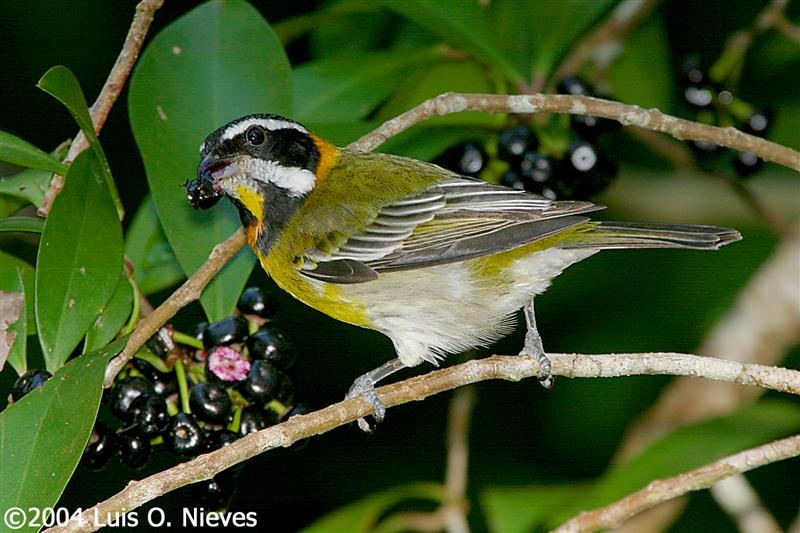
007a+(Small).jpg) Based on their differences in calls and in the plumages, scientists have separated this genus into four species: Spindalis portoricensis (Puerto Rican Spindalis), Spindalis nigricephala (Jamaican Spindalis), Spindalis dominicensis (Hispaniolan Spindalis), and Spindalis zena (the Western Spindalis) found in Bahamas, Cuba, Grand Cayman, and Cozumel Island off Mexico.
Based on their differences in calls and in the plumages, scientists have separated this genus into four species: Spindalis portoricensis (Puerto Rican Spindalis), Spindalis nigricephala (Jamaican Spindalis), Spindalis dominicensis (Hispaniolan Spindalis), and Spindalis zena (the Western Spindalis) found in Bahamas, Cuba, Grand Cayman, and Cozumel Island off Mexico.On a recent trip to the Bahoruco National Park, located at the south-western part of the Dominican Republic, Hispaniola, I had the opportunity to take photographs of a male Hispaniolan Striped-headed.jpg) Tanager, Spindalis dominicensis. For comparison purposes, I have included photos of a male Spindalis portoricensis (top) and a male Spindalis dominicensis (right). The first species is endemic to Puerto Rico, while the second is endemic to the Hispaniola. Notice the differences in colorations in the plumage, look especially around the back of the neck area and on the striations of the wings.
Tanager, Spindalis dominicensis. For comparison purposes, I have included photos of a male Spindalis portoricensis (top) and a male Spindalis dominicensis (right). The first species is endemic to Puerto Rico, while the second is endemic to the Hispaniola. Notice the differences in colorations in the plumage, look especially around the back of the neck area and on the striations of the wings.
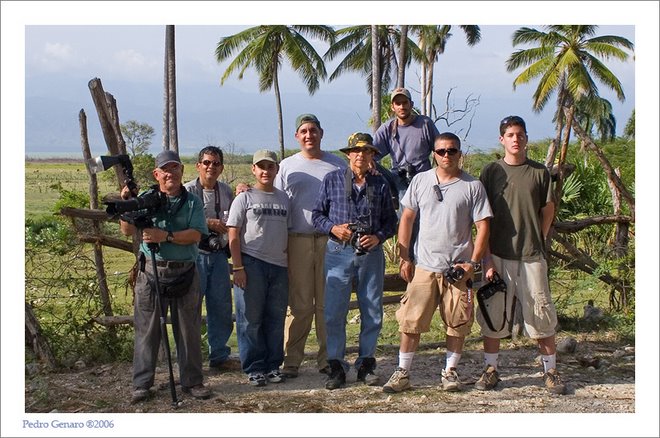
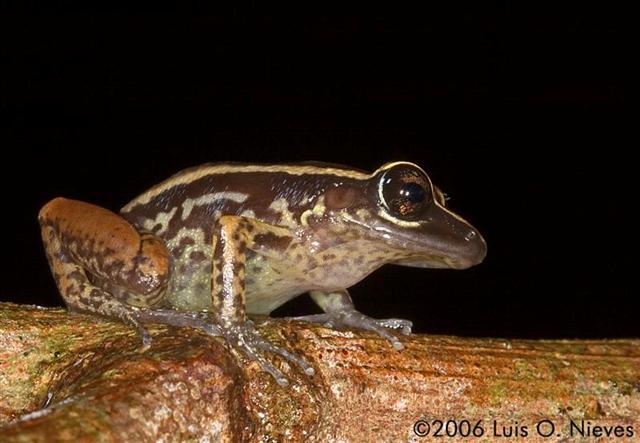 This amphibian is Eleutherodactylus richmondi (Coquí de Richmond), a species considered as threatened. This species's number are diminishing rapidly and supposedly “vanished” from the El Yunque National Forest (formerly Caribbean National Forest). On January 2006, our group found a small population in that same forest.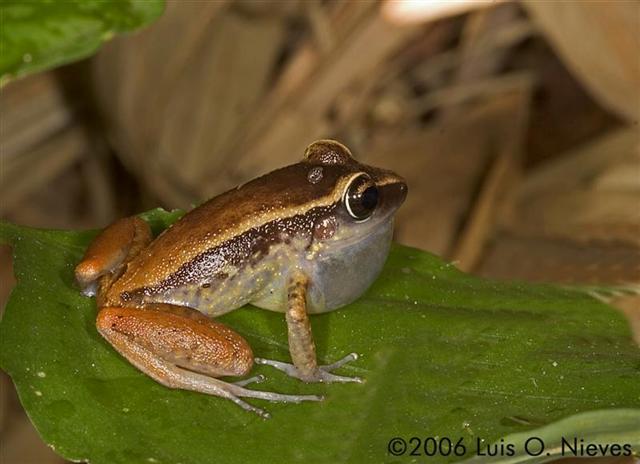
 The photo of the “vocalizing” male was taken while I was kneeling on top of a decaying dog that was dumped on the site. The photo on the right shows part of the area. Enjoy!




.jpg)
.jpg)
